

Spain's Youth Revolution: Inside the Team Built to Win Back-to-Back Titles
Match Snapshot
| Detail | Info |
|---|
| Team | Spain |
|---|---|
| Quarter-Final Opponent | Belgium |
| Date | July 10, 2026 |
| Venue | MetLife Stadium, East Rutherford (New York/New Jersey) |
| Road to the QF | Won Group → R32 → R16: beat Portugal 1-0 (Olmo 62') |
| Reigning Title | UEFA Euro 2024 champions |
| Head Coach | Luis de la Fuente |
| Dixon-Coles QF Win Probability | 50% |
Spain do not arrive at this World Cup as underdogs, dark horses, or a nostalgia act chasing one last run. They arrive as the reigning European champions, built almost entirely around players who were still teenagers when this tournament cycle began, and they have spent five matches in the United States proving that Euro 2024 was not an aberration. It was a blueprint.
1. The Youth Revolution Is No Longer a Theory
Two years ago, when Spain lifted the Euro 2024 trophy with the youngest squad in the competition, the reaction from most of the football world was a mixture of admiration and skepticism. Admiration, because a team built around a 16-year-old wide forward and a 21-year-old midfield orchestrator had just outplayed and out-thought every senior international side put in front of it. Skepticism, because international tournaments are traditionally the domain of experience — winning a World Cup or a Euros is supposed to require players in their prime, seasoned by scars, hardened by prior heartbreak.
Spain have spent this World Cup dismantling that assumption match by match. Lamine Yamal is 19 now, not 16, and the gap between "prodigy" and "the best player in the tournament" has essentially closed. Pedri, Gavi and Nico Williams have all added a full extra cycle of senior football to their games. Rodri arrived at this tournament as the reigning Ballon d'Or winner rather than an emerging star. The result is a squad that combines teenage explosiveness with the tactical maturity usually reserved for sides a decade older — and it shows in the way they have played through the group stage and knockout rounds alike.
This is not a young team hoping to grow into a major trophy. This is a team that has already won one, is fully aware of its own quality, and is now trying to do something no side has managed in the modern era: back up a European Championship with a World Cup in the very next major tournament, with essentially the same core group of players.
2. The Road to the Quarter-Final: Control From the First Whistle
Spain's path through this tournament has been the most quietly dominant of any side left in the competition.
| Stage | Result | Note |
|---|
| Group Stage | Won group | Dominant possession numbers in every fixture, no side got close to matching their territorial control |
|---|---|---|
| Round of 32 | Advanced | Comfortable, professional progression with minimal drama |
| Round of 16 vs Portugal | 1-0 win (Olmo 62') | A tactical masterclass in the Iberian derby |
That 1-0 scoreline tells you everything about how this Spain side wants to win football matches: control the ball, control the tempo, wait for the opponent's structure to break down on its own terms, and finish the moment when it arrives. It is patient, occasionally unspectacular to a neutral watching for chaos, and almost impossible to play against once it locks in.
3. The Yamal Phenomenon
No individual story at this World Cup has moved faster than Lamine Yamal's. At 19 years old, with 4 goals already logged in this tournament, he has become the first teenager since Pelé to be genuinely discussed as the best player at a World Cup — not the best young player, the best player, full stop.
What makes Yamal's tournament remarkable is not just the output, it is the manner of it. He combines close control at genuinely elite speed with a two-footed unpredictability that most wingers, even excellent ones, never develop: he can cut inside onto his favored left foot and curl a shot toward the far post, or he can go outside and simply outpace a full-back who thought he had him covered. Defenders who have faced him this tournament have described the same problem repeatedly — you cannot set your feet against Yamal, because committing to stop one option opens the other.
There is also a psychological dimension to what Yamal represents for this Spain squad. He was 16 when he became the breakout star of Euro 2024, a teenager thrust into the white-hot pressure of a European final and asked to deliver. He did. Two years later, at a World Cup, he is no longer the surprise package — he is the focal point that opposition coaches build entire game plans around, and he has continued producing regardless. That is the mark of a generational talent rather than a flash of youthful form: the game got harder around him, and he got better anyway.
The comparison to Messi at 19 is not made lightly by people around the Spanish national team, and it is not really about statistics — it is about the sense that a player this age should not have this level of composure on the biggest stage in the sport, and yet here we are.
4. Squad Depth: The System Around the Superstar
The mistake outside observers sometimes make with this Spain team is assuming it is Yamal plus ten complementary pieces. In reality, the squad's depth of genuine individual quality is what separates Spain from teams that rely on one or two match-winners.
Pedri is the metronome. Every possession sequence that matters for Spain runs through his decision-making at some point — when to slow the tempo, when to accelerate it, when to play the simple pass and when to attempt the line-breaker. He has the rare gift of appearing to have more time on the ball than the game logically allows, a trait that lets Spain retain possession under pressure that would dispossess most midfielders in world football.
Rodri, the reigning Ballon d'Or winner, is the platform everything else is built on. His positional discipline at the base of midfield is what turns Spain's high-risk, high-possession approach into a structurally low-risk operation — he reads the exact moment to drop between the centre-backs, the exact angle to offer an outlet, and the exact recovery position to prevent transitions before they start. Spain's ability to dominate the ball without conceding the counter-attacks that usually punish possession-heavy sides starts with Rodri's understanding of space.
Álvaro Morata, the captain, leads the line and has scored 3 goals this tournament. His value goes beyond the scoresheet — his movement in behind gives Spain a direct outlet when patient possession alone is not breaking a defence down, and his leadership inside the dressing room, as the senior figure among a squad of teenagers and early-twenties players, has been repeatedly credited by teammates as central to the group's composure under knockout-stage pressure.
Nico Williams provides the explosive directness on the left that mirrors Yamal's threat on the right, stretching defences horizontally and forcing opponents to defend the full width of the pitch rather than compacting centrally against Spain's midfield overloads.
Dani Olmo, scorer of the Portugal winner, offers a technical, between-the-lines quality that gives Spain another attacking route beyond the wide areas — a player comfortable receiving in tight pockets of space and turning quickly under pressure.
Gavi, when introduced, adds a ferocity and press-resistance to midfield that changes Spain's tempo instantly, a reminder that this squad's young core runs even deeper than the household names suggest.
This is a group with no obvious weak point in its attacking or midfield units, and remarkably, almost the entire spine of the team is 25 or younger.
5. Tactical Identity: Tiki-Taka Evolved
It would be lazy to describe this Spain team as a simple continuation of the tiki-taka era of 2008-2012. The core philosophical DNA — patient possession, technical comfort under pressure, a preference for control over chaos — traces directly back to that generation and to La Masia's broader influence across Spanish football. But Luis de la Fuente's version is a meaningfully evolved system, not a nostalgia act.
The clearest evolution is directness in the final third. Where the peak tiki-taka sides were sometimes criticized for over-passing in dangerous areas rather than committing to a final ball, this Spain squad has genuine vertical threats in Yamal and Nico Williams who are encouraged to take players on and attack space directly once Spain have manipulated the opponent's shape through patient buildup. The possession is not an end in itself — it is the mechanism that creates the space for individual moments of brilliance to matter.
Structurally, Rodri's role in dropping between the centre-backs during buildup is a modern adaptation that gives Spain a numerical advantage against opposing forward lines while still allowing both full-backs to push high and provide width. Spain's passing network as a result looks less like a horizontal chain and more like a rotating diamond, with Pedri and Rodri exchanging the deep-lying playmaker role depending on the phase of buildup.
The tournament-wide numbers back this up: Spain have recorded the highest pass completion rate of any team remaining in the competition, a statistic that reflects not caution but control — a team that simply refuses to give the opposition the ball back on their own terms.
6. Historical Context: From 2010 Glory to Euro 2024 Redemption
Spain's relationship with the World Cup carries real emotional weight heading into this quarter-final. The 2010 triumph in South Africa remains the only World Cup in the nation's history — a tournament won through a similar identity of possession-based control, if with a different generation of players (Xavi, Iniesta, Casillas, Puyol) executing it.
The years since have not always been kind. Group-stage elimination in 2014 as defending champions was a brutal comedown. And the 2022 tournament in Qatar ended in a gutting Round of 16 defeat on penalties to Morocco, a Moroccan side that went on to become the first African nation in history to reach a World Cup semi-final. That night in Qatar — Spain dominating possession for 120 goalless minutes and still losing the shootout — became a symbol of everything critics said was wrong with the possession-first approach: control without conversion, patience without punch.
Euro 2024 was the answer to that criticism. Spain won the tournament outright with the youngest squad in the competition, proving that the model of developing technical, possession-comfortable players through La Masia and Spain's broader academy system produces winning football, not just aesthetically pleasing football. Yamal was the 16-year-old breakout star of that triumph. Two years on, he is the focal point of a team trying to complete something rare: turning continental dominance into global dominance with essentially the same core.
That is the real subtext of this quarter-final and the tournament as a whole for Spain. This is not a team trying to prove it belongs among the elite. It is a team trying to prove that its very specific, very Spanish model of football — patient, technical, youth-driven — can be sustained at the very top for more than one tournament cycle.
7. Quarter-Final Preview: Youth Revolution vs. the Golden Generation's Last Dance
Spain's opponent in East Rutherford is a study in contrast. Belgium arrive at this quarter-final not as a rising generation but as a golden one entering its twilight — Kevin De Bruyne turns 35 within the tournament window, Romelu Lukaku is 33, and this core of players has spent over a decade ranked among the world's best without ever lifting a major trophy. Their 4-1 demolition of co-hosts USA in the Round of 16 was a statement that the quality has not faded, even if the years have caught up with the squad's average age.
The tactical picture is clear. Spain will look to do to Belgium exactly what they did to Portugal: dominate the ball, deny transitions, and force Belgium into a mid-to-low defensive block where their counter-attacking speed — De Bruyne's passing range, Jérémy Doku's directness, Lukaku's physical presence — has fewer opportunities to operate. Belgium, in turn, are unlikely to try to match Spain's possession numbers; expect them to cede territory willingly and look to break at pace the moment the ball is regained.
The individual matchup to watch is Rodri against De Bruyne — a Ballon d'Or winner against arguably the greatest Premier League playmaker of his generation, two players who have shared a club dressing room for years and know each other intimately. If Rodri denies De Bruyne time and central passing lanes, Spain's defensive platform holds. If De Bruyne finds even a few seconds of space, Belgium's entire counter-attacking machine comes alive.
Equally important is how Belgium's more experienced defensive options cope with Yamal's combination of speed and two-footed unpredictability — a matchup problem that has troubled every defence Spain have faced this tournament, and one Belgium's ageing full-backs may find especially difficult against recovery pace.
8. Dixon-Coles Projections
OddsFlow probability matrix for Spain vs Belgium:
| Result | Probability |
|---|
| Spain Win | 50% |
|---|---|
| Draw (90 min) | 26% |
| Belgium Win | 24% |
The most likely scorelines in the model's distribution cluster around 1-0 and 2-0 in Spain's favor, reflecting a team whose attacking output tends to arrive through patient buildup rather than chaotic, high-event football. Belgium's route to an upset runs almost entirely through their counter-attacking speed and set-piece threat — De Bruyne and Doku in transition, Lukaku's aerial presence at dead balls — rather than any expectation of matching Spain phase-for-phase in open play.
9. Verdict: Can Spain's Kids Go All the Way?
The case for Spain winning this World Cup outright is stronger than at any point since 2010, and arguably stronger even than that triumph, because this squad is not relying on a golden generation reaching its final peak — it is a group still climbing, with its best years statistically still ahead of most of its key players. Yamal at 19 is not the finished article. Pedri, Rodri and Nico Williams are all still inside their theoretical prime windows with years of tournament football ahead of them.
What Spain have proven across five matches in this tournament is that the Euro 2024 triumph was not a lightning-in-a-bottle moment produced by a favorable draw or an opponent's off day. It was the emergence of a genuinely elite footballing model — technical development through La Masia and Spain's wider academy system, patient possession as a structural weapon rather than a stylistic preference, and a coach in Luis de la Fuente willing to trust teenagers with the responsibility usually reserved for the most experienced players on the pitch.
The quarter-final against Belgium is a serious test, not a formality — a golden generation with genuine current-day quality and everything to play for in what may be their final World Cup together will not go quietly. But the underlying numbers, the tactical identity, and the sheer depth of individual talent across this Spanish squad all point in one direction: this is a team built not just to compete for a World Cup, but to win one, and to do it with players young enough to try to do it again in four years.
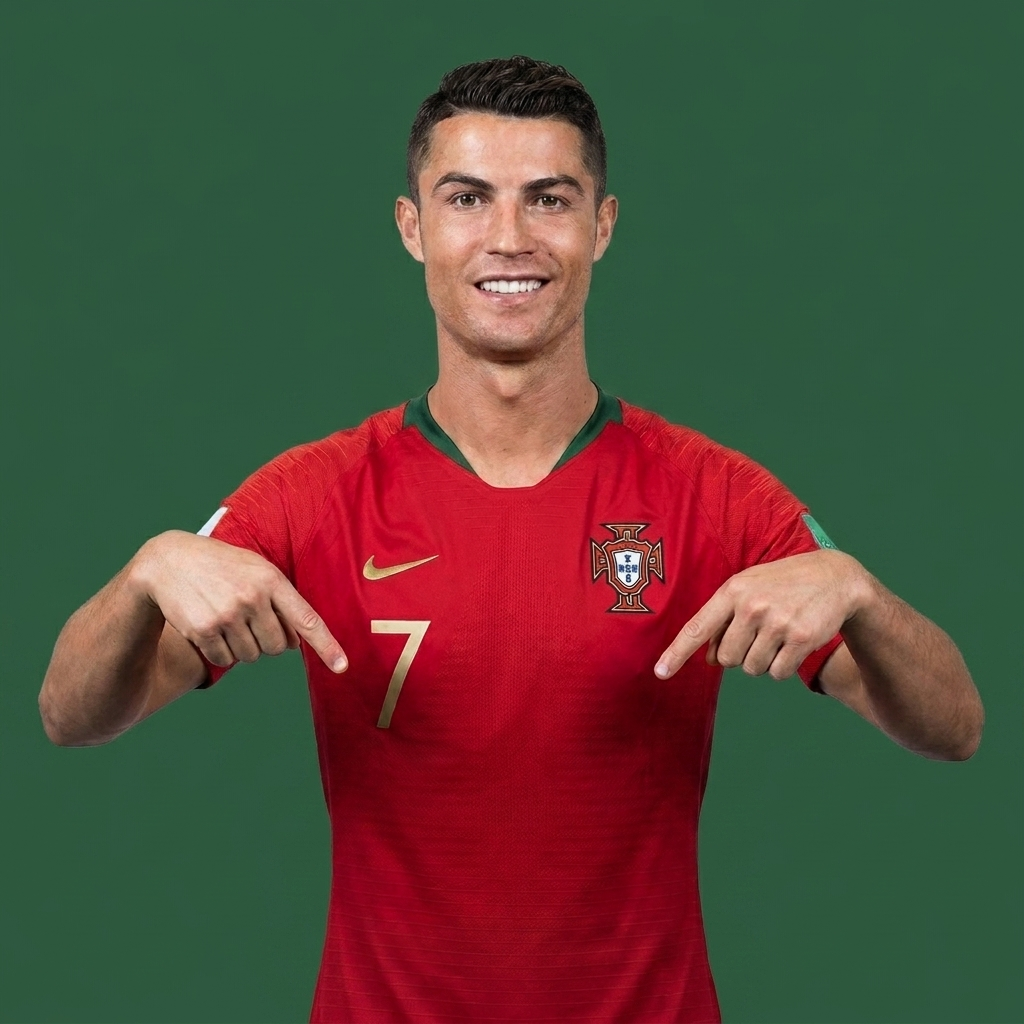
Quarter-Final, July 10, MetLife Stadium. Spain's youth revolution meets Belgium's golden generation in what could be the defining match of this tournament for both sides.
*All analysis and predictions generated by OddsFlow's Dixon-Coles model. For informational and entertainment purposes only. Always bet responsibly.*