
France World Cup 2026 Quarter-Final Analysis — Chasing a Third Star
The Pursuit
France arrive at the Boston Stadium on July 9 one win away from a World Cup semi-final, carrying the two things that have defined their last three tournaments: ruthless efficiency in knockout football, and a 27-year-old who is rewriting the record books in real time.
This is Didier Deschamps' fourth World Cup as head coach. He took Les Bleus to the quarter-finals in 2014, won the whole thing in 2018, lost the final on penalties in 2022, and has now steered a squad in transition back to the last eight in 2026 — chasing what would be a third star on the shirt and his second title as manager, a feat matched by very few coaches in the sport's history.
Standing between France and the semi-final is Morocco — the same opponent France eliminated 2-0 in the 2022 semi-final, ending the Atlas Lions' historic run. Four years on, Morocco are back in the quarter-finals having proven 2022 was no fluke, and they arrive in Boston looking for revenge. But this article is about France — their path, their depth, their system, and the historical weight bearing down on Kylian Mbappé as he chases a record that once seemed untouchable.
Tournament Path: Ruthless, Professional, Unspectacular When It Needs to Be
| Stage | Result | Key Details |
|---|
| Group Stage | Won group comfortably | Three matches, dominant control throughout |
|---|---|---|
| Round of 32 | 3-0 win over Sweden | Mbappé scored twice, setting a new World Cup knockout-stage record |
| Round of 16 | 1-0 win over Paraguay | Mbappé penalty, 70th minute — professional, low-risk victory |
| Total | 5 matches, 14 goals scored | 2.8 goals per game across the tournament so far |
The Round of 16 against Paraguay was the opposite kind of performance — and arguably more revealing. France did not need to be spectacular. Paraguay set up to frustrate, and for long stretches they succeeded. But Deschamps' side did what it has always done under his management: found the single moment that mattered. Mbappé converted a 70th-minute penalty, France closed the game out, and Les Bleus moved on. It was not thrilling. It was effective. Deschamps has never cared which of those two things people remember, as long as his team is still playing when the trophy is handed out.
That capacity to win two very different types of knockout games — a statement blowout and a nervy 1-0 — inside the space of a week is the clearest evidence that this squad has both the ceiling and the floor required to go all the way.
The Mbappé Factor: One Goal From Immortality
No player at this World Cup carries a bigger individual narrative than Kylian Mbappé, and it is not close.
The numbers, as they stand heading into the quarter-final:
| Record | Mbappé's Tally | Context |
|---|
| Goals this tournament | 7 | Tied for the tournament's Golden Boot lead |
| Assists this tournament | 2 | Involved in the large majority of France's goals |
| Career World Cup goals | 19 | 1 behind Lionel Messi's all-time record of 20 |
|---|---|---|
| Career World Cup knockout-stage goals | 11 | All-time record — already his, outright |
The knockout-stage record is arguably even more significant from a footballing standpoint, because it strips away the group-stage matches against weaker opposition and measures a player purely on games where elimination is the price of failure. Eleven goals in win-or-go-home football is not a product of one hot tournament — it spans 2018, 2022, and now 2026, three different France squads, three different tactical setups, and one constant: when the stakes are highest, Mbappé scores.
What makes him almost impossible to plan for is the combination of attributes rather than any single one. His top-end speed with the ball at his feet remains close to unmatched in the world game — defenders who show him to the outside get beaten on the outside, and defenders who try to force him inside get beaten there too, because his left foot is now every bit as lethal as his right. He no longer needs to be isolated in space to be dangerous; he drifts inside from the left, drops deeper to collect possession from Tchouaméni and Griezmann, and increasingly finishes chances created by others rather than manufacturing everything himself.
For opponents, the calculation is brutal. Committing a second defender to shadow him opens space elsewhere for Dembélé or Griezmann. Leaving him one-on-one is an invitation to be broken down by pure individual quality. There is no clean answer, and Morocco — for all their defensive organization — know that better than most, having lived through exactly this problem in 2022.
Where Mbappé sits in the Golden Boot race:
| Player | Goals | Status |
|---|
| Mbappé | 7 | Still alive in the tournament, leading the chase for both the Golden Boot and Messi's all-time record |
|---|---|---|
| Rivals near the top | 6-7 | Several remain in contention, but none carry the same historical stakes |
Squad Depth: Built for Knockout Football
Deschamps' teams have never been the most aesthetically pleasing at World Cups, but they are consistently among the deepest and most positionally disciplined. The 2026 squad follows the same blueprint.
| Position | Key Players | Role |
|---|
| Centre-Back | Upamecano, Konaté | Athletic, aggressive, comfortable defending in space against fast transitions |
|---|---|---|
| Defensive Midfield | Tchouaméni | The shield — breaks up play, allows the back line to stay compact, recycles possession under pressure |
| Creative Midfield | Griezmann | The connector — drops deep, links defense to attack, sets the tempo, still France's most intelligent passer |
| Wide Threat | Dembélé | Unpredictable dribbling, four goals this tournament, forces defenses to commit an extra body wide |
| Focal Point | Mbappé | Nominal left-sided forward who drifts everywhere, France's primary and secondary goal threat |
Griezmann, now well into his thirties in football terms of experience if not always in raw legs, remains the least talked-about indispensable player in this squad. He is the one who drops into pockets between the lines, draws markers out of position, and delivers the pass that turns a stalemate into a chance. Statistically he will never dominate a headline the way Mbappé does, but tactically France's attack does not function at the same level without him.
Dembélé's four goals this tournament are not an accident — his one-on-one unpredictability on the right flank means defenses cannot afford to double up on Mbappé without conceding space on the other side. That is the structural value of a genuine second attacking outlet: it turns Mbappé from a player who can be schemed against into a problem that has no clean defensive answer.
Beyond the headline names, the bench strength that has defined French squads since 2018 remains present — enough attacking and midfield cover to change a game's rhythm late on without a significant drop-off in quality, which matters enormously across a tournament that punishes squads thin on depth by the quarter-final stage.
The goalkeeping and full-back positions rarely make headlines, but they are the quiet foundation underneath everything else. A settled, experienced presence between the posts gives Deschamps the license to defend aggressively higher up the pitch, knowing individual errors at the back are less likely to be punished outright. Wide of the centre-backs, France's full-backs are asked to provide width in possession without ever compromising the compactness of the defensive shape — a balancing act that has become one of the clearest markers of a Deschamps side, and one more reason this squad has conceded so little across five matches on the way to the quarter-final.
Tactical Identity: Controlled Devastation
Deschamps has never been an ideologue. He does not build his teams around a possession philosophy or a pressing dogma. He builds them around winning football matches in the format that actually decides World Cups — single-elimination, one bad night away from being sent home — and that has shaped a very specific tactical identity.
The core principles:
- Defensive solidity over possession share. France are comfortable conceding the ball for long periods if it means staying compact and difficult to break down. Winning 1-0 is not a failure in this system; it is often the point.
- Transition speed over sustained buildup. When France win the ball back, the priority is getting it to Mbappé or Dembélé in space as quickly as possible, rather than working through slow, patient possession sequences.
- Individual quality as a release valve. Against low blocks — exactly what Morocco are likely to present — Deschamps trusts his most gifted attackers to create something from nothing rather than over-scripting patterns of play that can be defended against collectively.
- Set-piece danger. With Upamecano and Konaté's physical profile at the back and genuine delivery quality from midfield, France remain a threat from dead-ball situations, an often underrated weapon in knockout football where one moment can decide a tie.
This is not a flashy identity, and it has drawn criticism over the years from observers who want France to dominate the ball the way Spain or the pre-2022 Germany did. But it is an identity built for exactly the format it is being deployed in. World Cups are not decided by who accumulates the most possession across a tournament; they are decided by who survives seven single-elimination matches. Deschamps has built a system optimized for survival, and the results — one title, one runner-up finish, and now a third consecutive deep run — speak for themselves.
Historical Context: France's World Cup Pedigree
Few nations carry the weight of recent World Cup history the way France do heading into 2026.
| Tournament | Result | Note |
|---|
| 1998 | Champions | Hosted and won on home soil, the birth of the modern golden generation |
|---|---|---|
| 2006 | Runners-up | Lost the final to Italy on penalties, Zidane's infamous final match |
| 2018 | Champions | Second title, a young Mbappé's breakout tournament at age 19 |
| 2022 | Runners-up | Lost the final to Argentina on penalties after a legendary Mbappé hat-trick |
| 2026 | Quarter-Finals (ongoing) | Seeking a third star |
That experience matters in ways that are hard to quantify but easy to observe: penalty shootouts handled with composure, leads protected rather than surrendered, bad performances in one match followed by professional bounce-backs in the next rather than spirals. France's 2022 run to the final — falling agonizingly short only on penalties after Mbappé's hat-trick forced extra time — is recent enough that this current squad carries the memory of both the heartbreak and the belief that they were, on the night, the better team.
Quarter-Final Preview: The Morocco Rematch
Morocco is not a random draw for France in the last eight — it is the exact team that eliminated the previous era of European football's old guard in 2022 and then lost to France in the semi-final that followed. Four years later, Morocco have made it back to the quarter-finals, proving their run to the semis was not a one-off miracle but the arrival of a genuine footballing power.
What's different from 2022:
- Morocco's attacking output has grown. Their 2022 tournament was built almost entirely on defensive resilience — they conceded barely anything in open play until the semi-final. In 2026, Morocco have shown far more attacking teeth, scoring freely in the Round of 16.
- France's squad has evolved. Several key figures from 2022 have been phased in or out, and Mbappé himself has matured from a supporting superstar into the unambiguous focal point of the entire national team.
- The psychological dynamic has flipped slightly. In 2022, Morocco were the neutral's darlings, playing with nothing to lose. In 2026, expectation weighs on both sides — Morocco know they can compete with the best teams left in the tournament, and that changes how they approach the game.
- History still favors France. Morocco have never beaten Les Bleus in an official competitive match across their head-to-head record, and that psychological barrier does not disappear simply because Morocco's squad has improved.
Tactically, expect Morocco to set up in a compact, disciplined defensive shape designed to deny France central space and force play wide, where the sheer footballing IQ needed to break down organized banks of defenders becomes the deciding factor. France's response, as it almost always is under Deschamps, will be patience punctuated by moments of individual brilliance — waiting for the one mistake, the one half-yard of space, that Mbappé or Dembélé can exploit.
Dixon-Coles Projections
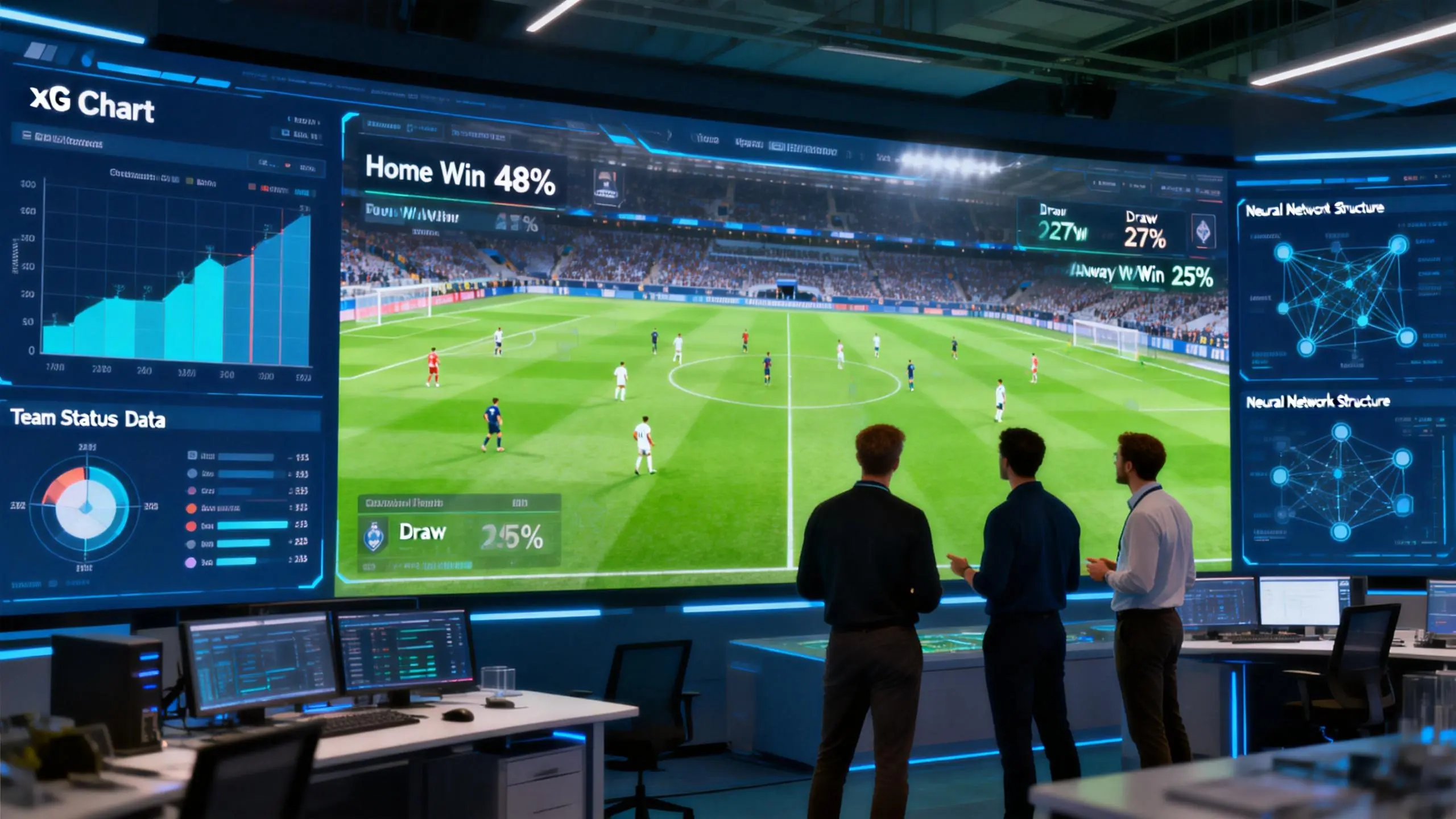
OddsFlow's Dixon-Coles model, calibrated with time decay and adjusted through isotonic regression, projects the following probabilities for France's remaining path through the tournament:
| Milestone | Probability | Interpretation |
|---|
| Win Quarter-Final vs Morocco | 58% | Clear favorites, but far from a formality against a battle-tested opponent |
|---|---|---|
| Reach Semi-Final | 58% | Direct consequence of winning the quarter-final |
| Reach Final | 21% | Roughly 1-in-5 chance of a second consecutive World Cup Final appearance |
| Win the World Cup | 13% | Among the tournament's genuine favorites, though not the outright leader |
Verdict: Are France the Favorites to Win It All?
France are not the outright favorite to win the 2026 World Cup by the model's numbers, but they belong in every conversation about who can. The combination of a knockout-tested coaching setup, a defensive spine capable of limiting the best attacks left in the tournament, and a talisman one goal away from becoming the greatest scorer in World Cup history gives them a route to the trophy that very few remaining nations can match.
The Morocco quarter-final is a legitimate danger game — not because France lack quality, but because Morocco have shown they possess the structure and now the attacking edge to trouble anyone. History and the model both lean toward France advancing. What happens after that will depend on whether Mbappé's record chase becomes a burden or, as it has at every previous stage of this tournament, simply fuel.
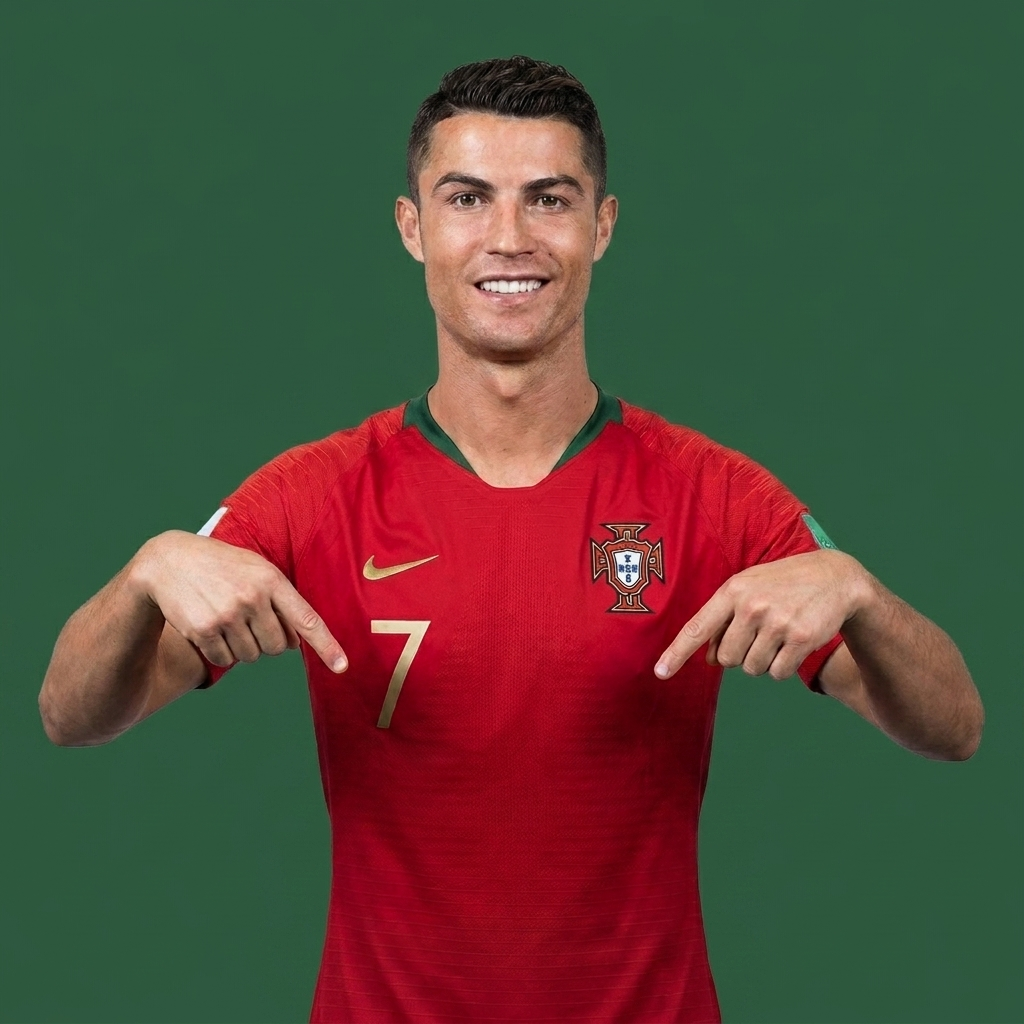
Quarter-Final, July 9, Boston Stadium. A third star — and a record that has stood since Messi lifted the trophy in 2022 — are both within reach.
*All projections generated by OddsFlow's Dixon-Coles model. For informational and entertainment purposes only.*