

Morocco World Cup 2026 — Africa's Greatest Story Enters the Quarter-Final Again
The Story So Far
| Detail | Info |
|---|
| Quarter-Final Opponent | France |
|---|---|
| Date | July 9, 2026 |
| Venue | Boston Stadium |
| Coach | Walid Regragui |
| Previous Best | 2022 World Cup Semi-Final (4th place) |
| This Tournament | R32 win → R16: beat Canada 3-0 |
| Historic Milestone | First African nation to reach the QF in consecutive World Cups |
Four years ago, Morocco became the story of the World Cup. Now they are back at the exact same crossroads — one win from a second consecutive semi-final, facing the exact same opponent that ended their run in 2022. This is not a fluke. This is a program.
1. Africa's Greatest World Cup Story Continues
In 2022, Morocco did something no African or Arab nation had ever done: reach a World Cup semi-final. They beat Belgium, Spain, and Portugal on the way there — three European heavyweights dismantled by a compact, disciplined, ferociously organized underdog. When it finally ended against France 2-0, the world had already crowned Morocco's run as one of the great World Cup stories of the century.
The follow-up question was obvious: was 2022 a lightning-in-a-bottle miracle, or the arrival of a genuine footballing power? Four years later, the answer is written in the record books. Morocco have reached the quarter-finals of the 2026 World Cup — the first African nation in history to reach the last eight (or better) in consecutive tournaments. Not Cameroon in 1990. Not Senegal in 2002. Not Ghana in 2010. Morocco, alone, has done it twice running.
This is the story that matters most heading into the France rematch: Morocco are no longer the surprise. They are the standard. Every African nation that follows will be measured against what Regragui's side has built — a footballing identity so distinct, so difficult to play against, that it has now produced back-to-back World Cup deep runs against the best teams on the planet.
2. Tournament Path — Group Stage Through the Canada Demolition
Group Stage
Morocco navigated Group C — sharing a pool with Brazil, Haiti, and Scotland — with the same defensive solidity that defined their 2022 run. They advanced to the knockout rounds having conceded sparingly, a hallmark that would carry through the entire tournament.
Round of 32
Morocco progressed through the Round of 32, continuing their pattern of controlled, low-event football. Opponents found the same problem every team in Qatar 2022 encountered: space simply does not exist against this Morocco team. Every pass into the final third is contested, every transition is snuffed out before it develops.
Round of 16 vs Canada — The Statement Win
If there was any doubt that Morocco's 2026 vintage might be a step below 2022, the Round of 16 destroyed it. Morocco beat co-hosts Canada 3-0, their most complete attacking performance of the tournament.
| Goal | Scorer | Detail |
|---|
| 1st | Azzedine Ounahi | Midfield surge into the box |
| 2nd | Azzedine Ounahi | Second-half strike, brace complete |
| 3rd | Ayoub El Kaabi / Soufiane Rahimi | Clinical finish on the counter |
3. The Ounahi Breakout — From Unknown to Tournament Star
Azzedine Ounahi's story is one of the great subplots of this World Cup. Four years ago in Qatar, he was a relative unknown playing his club football in France's Ligue 2, thrust into the global spotlight by Regragui's willingness to trust young, hungry players over reputation. He delivered — becoming one of the breakout stars of the 2022 tournament with his ball-carrying and vision from midfield.
In 2026, Ounahi has taken the final step from promising talent to genuine tournament star. His numbers tell the story:
- 4 goals this tournament — comfortably Morocco's top scorer
- A brace against Canada in the Round of 16, the signature individual performance of Morocco's campaign
- Elite ball progression from deep positions — Ounahi consistently carries the ball through the thirds where most midfielders would recycle possession sideways
- The complete midfield package: box-to-box legs, late runs into the penalty area, and increasingly, a clinical finish to match his creativity
What makes Ounahi's evolution significant tactically is that he gives Regragui's system a second dimension. In 2022, Morocco were defined almost entirely by their defensive block — a team that won by not losing, that ground opponents down through denial. Ounahi's runs from midfield give Morocco a direct, vertical outlet that did not exist at the same level four years ago. He is the player most likely to turn a 0-0 defensive chess match into a moment of individual brilliance, which is precisely what a team built to sit deep and counter needs: someone who can win the game in a single burst.
Against France, Ounahi's ability to drive at N'Golo Kanté's replacement in France's midfield screen — and to arrive late into the box when Morocco do break — will be one of the most important individual battles of the entire quarter-final round.
4. Squad Analysis — The Spine That Carries Morocco
Achraf Hakimi — The Modern Fullback, Redefined
Hakimi remains Morocco's most famous export and arguably their most important all-round player. Operating as an attacking right-back for PSG at club level, Hakimi gives Morocco something almost no other nation possesses at that position: a defender who can also function as an auxiliary winger, capable of delivering the final ball or scoring himself, while retaining the recovery pace to get back and defend in Regragui's compact structure.
Against France, Hakimi carries extra emotional weight. He and Kylian Mbappé were PSG teammates for three seasons and remain close friends — this is a matchup built on mutual respect and intimate tactical knowledge. Hakimi knows Mbappé's body language, his preferred angles of attack, his tendency to drift inside from the left. That knowledge cuts both ways, but it gives Morocco's captain a psychological edge few defenders in the world can claim against the tournament's top scorer.
Sofyan Amrabat — The Midfield Destroyer
Amrabat's role is unglamorous but foundational. He is the player who allows everyone in front of him to take risks, because he sits, screens, and breaks up attacks before they reach Morocco's back line. His tournament in 2022 established him as one of the best defensive midfielders in world football; 2026 has been a continuation of the same relentless, ground-covering, interception-heavy profile.
Against France's front line — Mbappé and a supporting cast capable of combining at speed — Amrabat's positioning discipline is arguably as important as any individual defender's. He is the player tasked with cutting the supply line before it ever reaches the space Morocco's back four is desperate to protect.
Yassine Bono — Wall Between the Posts
Bono was one of the standout goalkeepers of the 2022 tournament, and his 2026 form has been no different. Calm under pressure, an elite shot-stopper, and — crucially for Regragui's low-block system — comfortable playing behind a high defensive line when the situation calls for a more expansive setup. Bono's penalty-saving heroics in 2022 (the quarter-final shootout win over Spain) are part of Moroccan football folklore. Against France, his ability to produce a single world-class save at the right moment could be the difference between elimination and history.
Youssef En-Nesyri & Soufiane Rahimi — The Cutting Edge
Morocco's forward options give Regragui tactical flexibility. En-Nesyri offers aerial presence and the ability to hold up play and bring midfield runners into the game, while Rahimi — among the scorers in the Canada demolition — provides a more direct, penalty-box instinct. Neither striker needs a heavy service to score; both thrive off the transitions that Morocco's structure is specifically designed to generate. Against a France back line that can occasionally be exposed in transition, this pairing represents Morocco's most realistic route to goals.
5. Tactical Identity — Regragui's Defensive Wall
The single most important fact about this Morocco team is also the simplest: they are built, from the goalkeeper outward, to make scoring against them as difficult as possible.
The structure:
- A compact 4-3-3 that morphs into a 4-5-1 or 5-4-1 out of possession, depending on the opponent
- Extremely narrow central spacing — the gaps between Morocco's center-backs, holding midfielder, and central midfielders are minimal, forcing opponents wide
- Fullbacks who tuck in defensively to form back fives when under sustained pressure, denying the half-spaces that modern attacks are designed to exploit
- A front line that presses in coordinated waves rather than chasing individually, forcing errors rather than chasing shadows
Why it works: Regragui's block does not ask any individual defender to win a 1v1 duel in isolation. Every attacker who receives the ball inside Morocco's defensive third finds cover arriving from a second and third defender within a second or two. This is what statisticians call "structural defending" — the system does the work, not the individual. It is why Morocco conceded so little across their 2022 run (just one goal in open play before the semi-final) and why their defensive numbers in 2026 remain elite.
The evolution since 2022: What separates this Morocco team from the purely reactive version that reached the 2022 semi-final is their capacity to hurt teams once possession is won. The Canada performance was the clearest evidence yet — Morocco are not just a defensive unit anymore. Ounahi's ball-carrying, Hakimi's overlapping runs, and a front two capable of finishing quickly on the counter mean Regragui's team punishes teams that commit numbers forward against them. Opponents now face an impossible dilemma: sit back and Morocco will patiently probe until a gap appears; push numbers forward and Morocco will hurt you on the transition.
6. Historical Context — What 2022 Meant, and What 2026 Confirms
To understand why this quarter-final carries such weight, you have to understand what Morocco's 2022 run represented far beyond football.
Before Qatar, Africa's best-ever World Cup result was the quarter-finals — Cameroon in 1990 (lost to England), Senegal in 2002 (lost to Turkey), Ghana in 2010 (lost to Uruguay in the infamous handball incident). No African nation had ever gone further. In 2022, Morocco didn't just match that ceiling — they shattered it, going all the way to the semi-final, becoming the first African and the first Arab nation ever to reach that stage of a World Cup.
The victories along the way were not close calls against weaker sides — they were knockout wins over Spain (on penalties) and Portugal, two of the sport's traditional powers. Morocco's players celebrated with their mothers on the pitch after matches; the team's unity, humility, and connection to its fanbase became as much a part of the story as the results themselves. Across the Arab world and across Africa, Morocco's run was watched, celebrated, and claimed as a shared triumph — a symbol that the traditional footballing hierarchy could be challenged by a team built on defensive discipline, tactical intelligence, and collective sacrifice rather than individual superstar wattage.
The concern for any team that produces a once-in-a-generation run is regression — that talent leaves, the coach moves on, and the moment fades into nostalgia. Morocco have done the opposite. Regragui stayed. The defensive spine — Bono, the back line, Amrabat — largely stayed. And in 2026, with Ounahi evolving from breakout talent to genuine tournament star and Hakimi entering his prime as one of the world's best fullbacks, Morocco have proven 2022 was not an outlier. It was the first data point in a genuine footballing project.
Reaching consecutive World Cup quarter-finals as an African nation had literally never happened before Morocco did it. That fact alone — regardless of what happens against France — has already rewritten the history books.
7. Quarter-Final Preview — France Rematch: Revenge or Repeat?
What Happened in 2022
France beat Morocco 2-0 in the Qatar semi-final. Theo Hernandez opened the scoring early; Randal Kolo Muani sealed it late. It was closer than the scoreline suggested — Morocco had early chances they could not convert, and their previously impenetrable defence was breached for the first time in the tournament that night. In six official meetings between the two nations, France remain unbeaten: four wins, two draws. Morocco have never beaten France in an official competitive fixture.
The Rematch, Four Years On
This is the psychological barrier Morocco must finally break, and the circumstances have shifted meaningfully in their favour compared to 2022:
- Ounahi is a different player. In 2022 he was a breakout revelation; in 2026 he is a proven tournament performer with a knockout-stage brace already on his résumé.
- The attacking output has grown. Morocco's 3-0 demolition of Canada was their most complete attacking performance in either World Cup cycle — proof they can now punish teams, not just frustrate them.
- Hakimi enters at the peak of his career, with three additional seasons of elite PSG football and a deeper understanding of exactly how to expose the space Mbappé vacates.
- The 2022 semi-final proved the blueprint works — Morocco pushed France for long stretches of that game and were beaten by two moments of individual quality, not by being outclassed.
France, for their part, arrive as the form team of the tournament: 14 goals in five matches, Mbappé chasing history at 19 World Cup career goals (one behind Messi's all-time record), and 11 knockout-stage goals already the all-time record in his own right. Facing Mbappé and Dembélé simultaneously — two players capable of unlocking a defence individually — is a fundamentally different proposition to anything Morocco has faced so far this tournament.
The Tactical Question
Everything hinges on whether Morocco can replicate the defensive discipline of 2022 while adding the attacking sharpness they have shown in 2026. If Regragui's side can keep the game locked at 0-0 or 1-1 into the final 20 minutes, their set-piece threat and Ounahi's capacity for a moment of magic give them a route that did not fully exist four years ago. If France score first, however, history suggests the same pattern repeats: Morocco's approach requires them to defend a lead or a stalemate, not chase a game from behind.
8. Dixon-Coles Model Projections
OddsFlow's probability matrix for the July 9 quarter-final:
| Result | Probability |
|---|
| France Win | 58% |
|---|---|
| Draw (90 min) | 22% |
| Morocco Win | 20% |
Reading Morocco's 20%
A 20% win probability against the tournament's most in-form team is not a dismissal — it reflects genuine two-way respect from the model. Morocco's defensive numbers (goals conceded per match, expected goals against) remain among the best of any quarter-finalist, and Dixon-Coles specifically rewards teams with strong defensive control in tight, knockout-style matches where a single moment can decide the outcome. The model also accounts for Morocco's improved attacking output in 2026 relative to 2022 — the Canada result moved their expected-goals-for parameters meaningfully compared to their group-stage numbers.
The most likely path to a Morocco win, statistically, is a low-scoring affair decided by a set piece, an individual moment from Ounahi or Hakimi, or a penalty shootout after 120 goalless minutes — almost an exact echo of how Morocco beat Spain in 2022. The model gives real, if modest, weight to that pathway.
What Would Move the Model
- Morocco scoring first: their win probability would jump significantly, as it forces France to change their approach against a defence built specifically to punish chasing teams.
- A red card to either side: given the compactness of Morocco's structure, a France player being sent off would disproportionately favour Morocco's chances of holding out and progressing to penalties.
- Extra time: Morocco's stamina-based, low-event style has historically served them well in matches that go to 120 minutes — their 2022 quarter-final win over Spain, and their run to the semi-final overall, was built on physical and mental resilience in the closing stages of knockout football.
9. Verdict — Underdog or Legitimate Contender?
The label "underdog" undersells what Morocco have built. This is a team that has already achieved what no African nation in history has managed: reaching the World Cup quarter-finals (or better) in two consecutive tournaments. They did it with a squad largely retained from 2022, a coach who stayed to finish what he started, and a young talent — Ounahi — who has evolved from breakout star to genuine difference-maker.
Are Morocco favourites against France on July 9? No — the Dixon-Coles model, France's attacking numbers, and the historical head-to-head all point the other way. But "underdog" implies a team playing above its level, riding luck, running on fumes. Morocco are not that. They are a legitimate, structurally sound, historically proven knockout-football machine that has already beaten Spain and Portugal in this exact competition once before, and that arrives at this rematch a more complete team — offensively and defensively — than the version that lost 2-0 in Qatar.
Whatever happens at Boston Stadium, Morocco have already cemented themselves as one of the defining national team stories of this generation of football. A win over France would not be a miracle. It would be the confirmation of a program that has been building toward exactly this moment for four years.
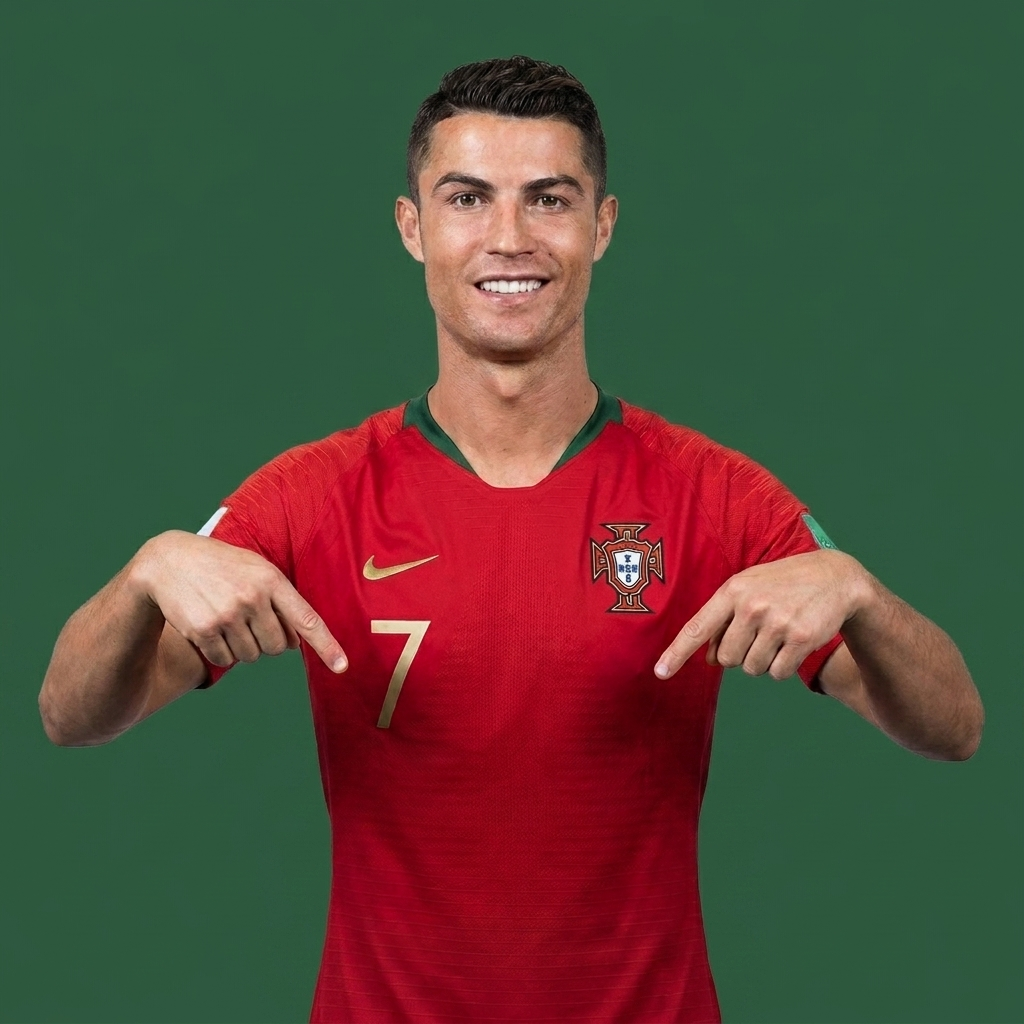
Quarter-Final, July 9, Boston Stadium. Africa's story continues — one way or another.
*All predictions generated by OddsFlow's Dixon-Coles model. For informational and entertainment purposes only. Always bet responsibly.*