
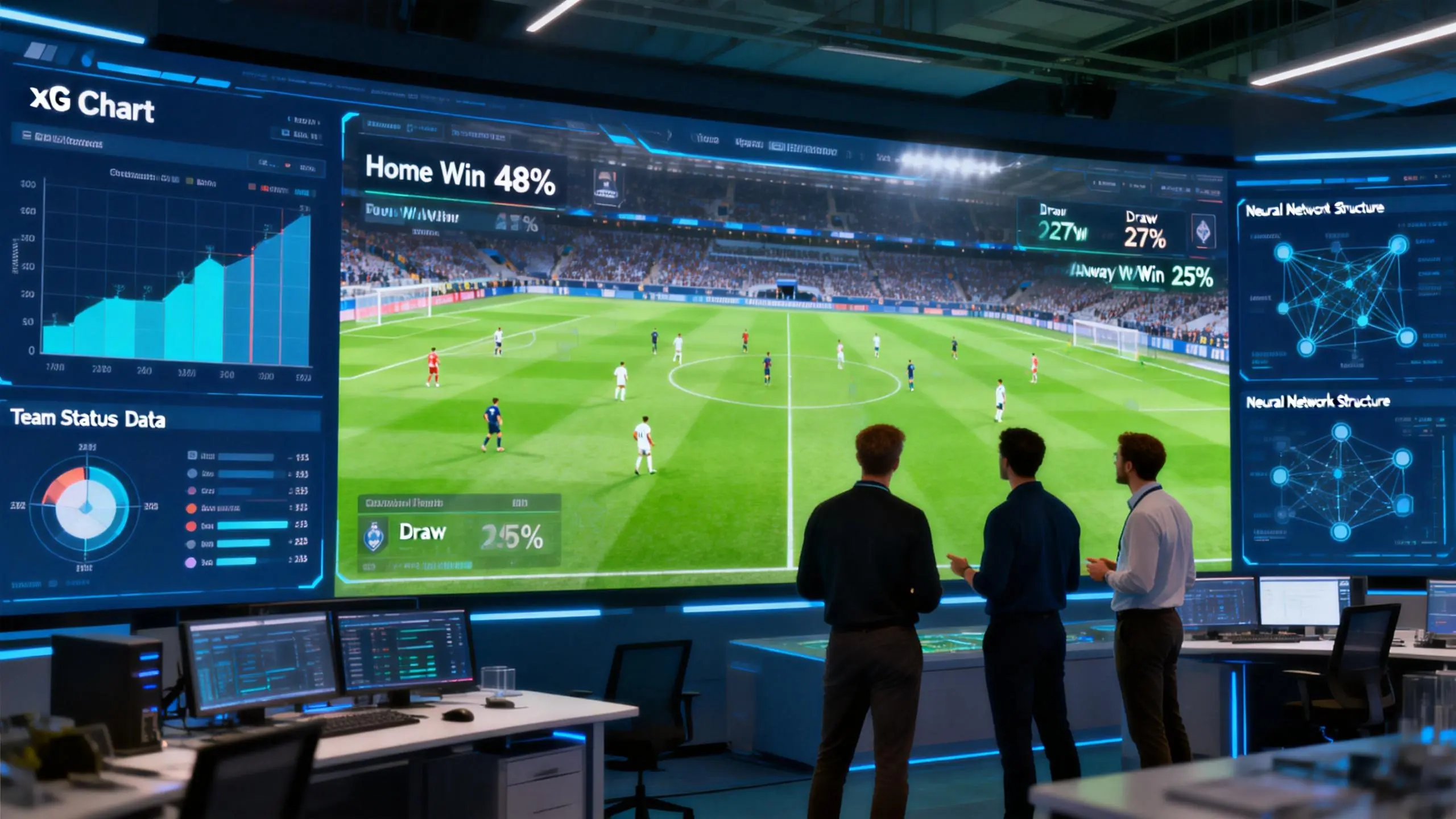
Belgium World Cup 2026 Quarter-Final Analysis — The Golden Generation's Last Dance
Match Information
| Detail | Info |
|---|
| Opponent | Spain |
|---|---|
| Date | July 10, 2026 |
| Venue | MetLife Stadium, East Rutherford (New York/New Jersey) |
| Stage | Quarter-Final |
| Stakes | Winner advances to the Semi-Final |
| The Storyline | Almost certainly the Golden Generation's last World Cup together |
Kevin De Bruyne turns 35 during this tournament. Romelu Lukaku is 33. Eden Hazard has already retired from international football; Vincent Kompany and Jan Vertonghen are gone from the pitch. The "Golden Generation" era that has defined Belgian football since the mid-2010s is down to its final act. There will not be a World Cup 2030 for most of this squad. This is it — the last real chance to turn a decade of individual brilliance and FIFA #1 rankings into the one thing that has always eluded Belgium: a trophy, or at minimum, a run deep enough to justify the hype.
1. The Golden Generation's Last Dance
No European nation of Belgium's size has produced a footballing generation as gifted, and as star-crossed, as this one. Since the early 2010s, a remarkable production line — Eden Hazard, Kevin De Bruyne, Romelu Lukaku, Thibaut Courtois, Vincent Kompany, Toby Alderweireld, Jan Vertonghen, Axel Witsel — turned a nation of 11 million people into a fixture at the top of the FIFA world rankings. Belgium spent extended stretches as the officially top-ranked team on the planet. They were Premier League title winners, Champions League regulars, household names across Europe. And yet, when the biggest prizes were on the table, Belgium always found a way to fall just short.
Now, in 2026, the core of that generation is down to its final representatives. What remains is Kevin De Bruyne — arguably the greatest passer of his generation — and Romelu Lukaku, still leading the line at 33 with the same physical menace he had a decade ago. Around them, coach Domenico Tedesco has built a squad that blends this fading golden core with a genuinely exciting young supporting cast: Jérémy Doku's explosive pace, Amadou Onana's engine in midfield, Leandro Trossard's tactical versatility.
This is Belgium's last dance, and the 4-1 demolition of co-hosts USA in the Round of 16 proved it can still be a spectacular one.
2. Tournament Path: Group Stage to a Statement in the Round of 16
| Stage | Result | Key Moment |
|---|
| Group Stage | Qualified | Steady, professional campaign under Tedesco |
| Round of 32 | Advanced | Progressed as expected against lower-ranked opposition |
| Round of 16 vs USA | 4-1 W | De Bruyne, Lukaku (x2), Doku all on the scoresheet |
|---|
Facing co-hosts USA in front of a partisan home crowd desperate for a fairytale, Belgium delivered a statement instead. Kevin De Bruyne opened the scoring with the kind of finish that has defined his career — vision married to execution. Romelu Lukaku then took over, scoring twice in a spell where his combination of hold-up strength and predatory instinct in the box simply overwhelmed USA's back line. Jérémy Doku added gloss late on, running at tired American full-backs with the kind of directness that no defender in this tournament has fully solved. Christian Pulisic pulled one back from the penalty spot for USA, but it was academic — Belgium had already made their point.
The result did more than send Belgium into the last eight. It answered the question that had hung over this squad for the entire tournament: do the old legs still have one big performance left in them? The 4-1 demolition of the hosts, on their own turf, in front of their own fans, is the loudest possible "yes."
3. De Bruyne at 35: The Masterclass Continues
If this is Kevin De Bruyne's final World Cup — and at 35, there is no realistic path to 2030 — he is determined to leave on his own terms. Three goals and four assists through the tournament so far place him directly in the conversation for player of the tournament, an almost unthinkable achievement for a midfielder in his mid-thirties playing his fourth World Cup.
What makes De Bruyne's 2026 remarkable is not that he is still good — elite passers with his level of technique often retain effectiveness into their mid-thirties — but that he has adapted his role to compensate for the athleticism he has inevitably lost. He drops deeper to collect the ball in build-up, uses his still-elite scanning and passing range to bypass entire units of opposition midfielders with a single ball, and picks his sprints more selectively than the box-to-box De Bruyne of 2018. It is a masterclass in aging gracefully at the highest level of the sport — not fighting the decline in physical output, but restructuring his game around what remains: vision, technique, and an almost unmatched understanding of space.
As Belgium's captain, De Bruyne also carries the emotional weight of the entire "last dance" narrative. Teammates and coaching staff alike have spoken about his influence in team meetings and on the training pitch — a player who knows this is his last opportunity, using that knowledge to drive standards rather than let sentiment become a distraction. The 4-1 win over the USA was as much about De Bruyne's leadership as his individual output.
4. Squad Analysis: Lukaku's Redemption, Doku's Emergence, Onana's Future
Romelu Lukaku — Redemption After 2022
Romelu Lukaku's 2022 World Cup in Qatar was a personal nightmare — a player low on match fitness after injury, missing a string of gilt-edged chances in a group-stage exit that ended Belgium's golden generation's most realistic remaining shot at glory before the knockout rounds even began. The images of Lukaku slumped on the turf, and later in tears on the bench, became emblematic of Belgium's broader tournament failure.
2026 has been about rewriting that story. Three goals so far, including a decisive double against the USA in the Round of 16, show a player back to full physical condition and, just as importantly, back to full confidence. At 33, Lukaku is not the same explosive athlete he was at his 2018 peak, but he has become a smarter, more efficient version — timing his runs better, using his frame to shield the ball rather than simply bulldoze through it, and picking his moments to attack the box rather than chasing every long ball. For a player who has carried the psychological weight of Belgium's biggest tournament disappointment for four years, this quarter-final represents a genuine chance at redemption.
Jérémy Doku — The Emergence
If De Bruyne and Lukaku represent the golden generation's sunset, Jérémy Doku represents what comes next — except "next" is now, not some distant future tournament. The Manchester City winger has been one of the standout attacking threats of the entire World Cup, his combination of close control at high speed and directness in isolation making him one of the must-watch players of the knockout stage. Against the USA, Doku terrorized tired full-backs late in the match, a sign of both his fitness and his hunger to make an individual mark on this tournament.
Doku's importance to Belgium's system cannot be overstated. In Tedesco's counter-attacking framework, Doku is the release valve — the player who turns a defensive stop into a three-on-two in the blink of an eye. His form means Belgium do not have to rely solely on De Bruyne's passing range to generate transition threats; Doku can simply take the ball and go.
Amadou Onana — The Future in the Present
Amadou Onana's role in this Belgium midfield is easy to overlook next to De Bruyne's creativity and Lukaku's goals, but his engine covers ground that a 35-year-old De Bruyne and a physically demanding Lukaku simply cannot. Onana's ball-winning, his willingness to press higher up the pitch, and his passing range from deep give Tedesco's system defensive solidity without sacrificing the platform for De Bruyne to operate. He is also, unlike most of this squad, a genuine long-term piece — a player who will likely lead Belgium's midfield well beyond this golden generation's departure. For now, though, his job is simpler: give De Bruyne the license to play further forward and give Belgium the defensive cover to survive knockout football.
Leandro Trossard — The Connector
Trossard's versatility — capable of playing across the front line and dropping into a false-nine or wide role depending on the game state — gives Tedesco tactical flexibility that few other squads in this tournament can match. He is the connective tissue between Belgium's midfield structure and its front-line threats, someone who can adjust Belgium's shape mid-match without requiring a substitution.
5. Tactical Identity: Tedesco's Counter-Attack System
Domenico Tedesco inherited a golden generation past its athletic peak and had to solve a genuine tactical puzzle: how do you build a system around players whose legs are no longer what they were, without simply becoming a nostalgia act? His answer has been a disciplined, compact counter-attacking structure that asks less of his aging stars in terms of ground covered, and more in terms of decision-making in key moments.
The Tedesco blueprint:
- Belgium concede territory willingly against superior possession sides, compacting into a mid-to-low defensive block that limits the space De Bruyne and Lukaku's legs have to cover defensively
- Doku provides the vertical outlet — the fastest route from a defensive stop to a scoring chance, often requiring just one or two passes
- De Bruyne drops into deeper pockets than his career-peak positioning to collect possession in transition zones, using his passing range to bypass opposition pressing structures in a single pass rather than dribbling through them
- Lukaku serves as the target and the out-ball, holding up long passes and buying time for support runners to arrive
- Onana's ball-winning in midfield allows the front players to conserve energy for the moments that matter most
This is not the expansive, high-press Belgium of the mid-2010s. It is a version built for efficiency and knockout football, where a handful of clinical moments matter more than sustained territorial dominance. The 4-1 win over the USA was this system operating at its absolute peak — Belgium absorbed early USA pressure, then scored four times through a mix of transition play and set-piece quality.
The risk with this approach is obvious: if Belgium fall behind against a possession-dominant side like Spain, they may be forced to abandon the compact structure that makes them dangerous and chase the game in more open spaces where their aging legs are exposed.
6. Historical Context: FIFA #1 With Nothing to Show
Belgium's relationship with major tournament football over the past decade is one of the strangest stories in the modern game. For extended stretches between 2015 and 2020, Belgium was ranked the official #1 team in the world by FIFA — ahead of eventual champions France, ahead of Brazil, ahead of every traditional football superpower. And yet the trophy cabinet remains empty.
The high-water mark came at the 2018 World Cup in Russia, where Belgium reached the semi-finals before falling to eventual champions France, then beat England in the third-place playoff — still, to this day, the best World Cup finish in Belgian history. Before that, a run to the quarter-finals in 2014 had already signalled the generation's arrival. It was widely assumed at the time of the 2018 run that this would be the first of multiple deep runs from a squad seemingly entering its prime. Instead, the following major tournaments told a story of steady decline: a quarter-final exit at Euro 2020, and then, most painfully, a group-stage exit at the 2022 World Cup in Qatar — a tournament where Belgium, still ranked among the best teams in the world on paper, were eliminated before the knockout rounds even began. Lukaku's injury-affected tournament and a stunning group-stage loss to Morocco turned 2022 into a humiliation that many assumed marked the definitive end of the golden generation's realistic chances. To this day, Belgium have never reached a World Cup final, and their 2018 semi-final remains the only time this generation has gone that far.
That 2022 exit is the shadow hanging over this entire 2026 campaign. Nobody inside or outside the Belgian camp expected a redemption arc this vivid. The 4-1 demolition of the USA in the Round of 16 is the clearest signal yet that this generation, so often accused of underperforming relative to its individual talent, still has one final chapter worth writing.
7. Quarter-Final Preview: Spain — Experience Versus Youth
Belgium's reward for beating the USA is arguably the toughest remaining opponent in their half of the draw: Spain, the reigning European champions, fielding the youngest and arguably most talented squad left in the tournament, built around 19-year-old sensation Lamine Yamal, midfield metronome Pedri, and Ballon d'Or holder Rodri.
This quarter-final is a genuine clash of eras and philosophies. Spain do not merely enjoy possession — they weaponize it, using sustained control to deny opponents the very transition moments that Belgium's entire system is built around. Spain's win over Portugal in the Round of 16 was a tactical masterclass built on patience: they simply refused to give Portugal's dangerous counter-attackers the ball to counter with.
For Belgium, that presents an obvious problem. Tedesco's system depends on winning the ball in defensive and midfield areas and breaking quickly — but against a Spain side that completes passes at an extraordinarily high rate and rarely gives possession away carelessly, those turnover opportunities may be rare and hard-earned. Belgium may find themselves defending for long spells with the ball, exactly the kind of game state that tests De Bruyne's 35-year-old legs and Lukaku's ability to stay involved in a match where his team barely has the ball.
Belgium's route to an upset is narrow but real. Rodri anchors Spain's structure superbly, but De Bruyne against Rodri is arguably the single most compelling individual battle of the entire round — two players who have shared a Manchester City dressing room for years, who understand each other's tendencies intimately, going head-to-head with a semi-final place on the line. If De Bruyne can find even a handful of seconds of space against Rodri, his passing range is more than capable of turning a single moment into a Doku or Lukaku chance. Set pieces are another route: Lukaku's physical presence against Spain's back line is a different problem than the technical, ball-playing opponents Spain have faced for most of the tournament.
Dixon-Coles gives Belgium a 24% win probability in this quarter-final — a significant underdog tag, but not an impossible one, and one that reflects genuine defensive discipline and knockout-football experience against a Spanish side that, for all its talent, has never been tested by a team quite like this golden generation.
8. Dixon-Coles Projections
OddsFlow probability matrix — Belgium vs Spain, Quarter-Final:
| Outcome | Probability |
|---|
| Spain Win | 50% |
|---|---|
| Draw (90 min) | 26% |
| Belgium Win | 24% |
The model also flags Belgium's goal-scoring profile as heavily weighted toward set pieces and fast transitions rather than sustained buildup play, consistent with Tedesco's tactical approach and the way Belgium scored their four goals against the USA.
9. Verdict: Last Dance Fairy Tale or One Tournament Too Late?
There is a version of this story that ends in East Rutherford with Belgium's golden generation falling one round short, undone by a Spanish side simply too young, too well-drilled, and too talented to be stopped by a compact defensive block and a handful of transition moments. The model gives that outcome a 50% probability, and it would be a fitting, if disappointing, final chapter for a generation that has spent a decade being ranked among the world's best without ever quite closing the gap between ranking and trophy.
But there is another version — the one Belgium themselves believe in, the one the 4-1 demolition of the USA hinted at. In this version, De Bruyne produces one more midfield masterclass, finding Doku or Lukaku in behind a stretched Spanish defense at exactly the moment it matters. Lukaku, playing with the freedom of a player who has already rewritten his own personal narrative this tournament, bullies Spain's centre-backs at a set piece. Belgium's aging legs hold for ninety-plus minutes, propelled by the knowledge that this door closes forever after this match, whichever way it goes.
Whichever version plays out, this much is certain: Kevin De Bruyne, Romelu Lukaku, and the rest of Belgium's golden generation are not going quietly. The USA found that out the hard way in the Round of 16. Spain, for all their youth and talent, would be wise to expect the same.
Quarter-Final, July 10, MetLife Stadium. For Belgium's golden generation, one match stands between one more dance and the final curtain.
*Analysis generated using OddsFlow's Dixon-Coles model and tournament data. For informational and entertainment purposes only. Always gamble responsibly.*