

Spain vs Argentina: World Cup 2026 Final — Yamal's Dawn Meets Messi's Sunset
Everything about this World Cup — every knockout twist, every golden-generation storyline, every record chase — has been building toward one impossible-to-script final. On July 19, at MetLife Stadium in East Rutherford, New Jersey, Spain and Argentina will meet for the first time in World Cup history with the biggest trophy in football on the line. On one side of the halfway line: Lamine Yamal, 19 years old, the most gifted teenager the sport has produced in a generation. On the other: Lionel Messi, 39, playing in what is almost certainly his final World Cup match, one win away from a feat only Italy and Brazil have ever managed — defending the trophy back-to-back.
There is no need to manufacture drama here. The two most stylistically important footballing nations of the last twenty years, a genuine changing-of-the-guard subplot at the game's highest level, and a defending champion who has looked composed and ruthless in equal measure — all of it converges in New Jersey in a match that will be talked about for decades regardless of the scoreline.
Match Information
| Detail | Info |
|---|
| Fixture | Spain vs Argentina |
|---|---|
| Stage | Final |
| Date | July 19, 2026 |
| Venue | MetLife Stadium, East Rutherford, New Jersey |
| Kickoff | 19:00 UTC / 3:00 PM ET / 21:00 Madrid / 16:00 Buenos Aires |
| Manager (Spain) | Luis de la Fuente |
| Manager (Argentina) | Lionel Scaloni |
| Spain — World Cup Titles | 1 (2010) |
| Argentina — World Cup Titles | 3 (1978, 1986, 2022) — defending champions |
| Stakes | World Cup 2026 champion crowned |
This is the first-ever World Cup meeting between Spain and Argentina. Two football superpowers that have spent decades on separate continental tracks finally collide — with the sport's biggest prize as the introduction.
1. The Road to New Jersey
Spain's Path to the Final
| Round | Result | Notes |
|---|
| Group Stage | Winners | Strong possession numbers throughout |
| Round of 16 | Spain 1-0 Portugal | Dani Olmo scored the winner in the 62nd minute |
| Quarter-Final | Spain 2-1 Belgium | Fabián Ruiz opened the scoring (30'), De Ketelaere equalized before half-time, Mikel Merino won it in the 88th minute |
| Semi-Final | Spain 2-0 France | Spain dominated with 64% possession, ending France's tournament and Kylian Mbappé's record chase |
Argentina's Path to the Final
| Round | Result | Notes |
|---|
| Group Stage | Winners | Messi scored a hat-trick against Algeria |
| Round of 16 | Argentina 3-2 Egypt | Messi scored twice in the second half to swing a tight, error-strewn match |
| Quarter-Final | Argentina 3-1 Switzerland (AET) | Messi opened the scoring; Julián Álvarez and Enzo Fernández added the others in extra time |
| Semi-Final | Argentina 2-1 England | Argentina survived a tense Atlanta semi-final to reach a second straight Final |
2. Head-to-Head History — A Final With No Precedent
There is genuinely no World Cup history to draw on here. Spain and Argentina have simply never met at a World Cup before — an extraordinary fact given both nations' combined haul of four World Cup titles and their status as two of the sport's most iconic footballing identities. Their meetings have been almost entirely confined to friendlies, the most memorable of which remains Spain's emphatic 6-1 win over Argentina in Madrid in October 2018 — a result that, in hindsight, looks more like a snapshot of a transitional Argentina side than any real guide to this current, battle-hardened Scaloni team. Spain hold the broader historical edge in exhibition fixtures across the decades, but none of that carries any real weight into a World Cup Final between two completely different generations of both squads. This match writes its own history from kickoff.
It also represents a rarer meeting than the head-to-head gap alone suggests: a UEFA nation against a CONMEBOL nation in a World Cup Final, a pairing that has happened only a handful of times in tournament history and has not occurred since Germany beat Argentina in 2014. European and South American football have developed along genuinely distinct tactical and cultural lines for decades, and Finals that cross that divide tend to produce exactly the kind of stylistic collision — patient positional control against individual improvisation and transition speed — that this specific matchup promises.
3. The Yamal vs Messi Storyline: Dawn Meets Sunset
No storyline in world football carries more emotional and symbolic weight right now than this one. Lamine Yamal turned 19 on July 13 — six days before he could become a World Cup champion at an age when most players are still breaking into their first-team squads. Messi will be 39 when he walks out at MetLife Stadium, closing out an international career that has already delivered every individual and collective honor the sport has to offer, chasing the one achievement that would place him definitively above every other player who has ever lived: back-to-back World Cup titles.
This is not a manufactured torch-passing narrative — it is the literal one. Yamal represents the clearest heir to the type of generational, era-defining talent that Messi has embodied for two decades: the ability to receive the ball in impossible spaces, manipulate defenders with minimal touches, and produce decisive moments in the biggest games regardless of age or occasion. Messi, at the absolute end of that arc, is attempting to close his international career with the single greatest individual achievement remaining in the sport. Whichever way the Final goes, football will remember July 19, 2026 as the night these two players shared a pitch on the biggest stage the sport offers — one player's story ending, another's just beginning.
Records on the Line
Strip away the emotional weight of the Yamal-Messi narrative and there is still a mountain of hard history riding on this single match. Argentina winning would make Lionel Scaloni's side just the third nation in World Cup history to retain the trophy, joining Italy (1934, 1938) and Brazil (1958, 1962) in one of the sport's rarest and most exclusive achievements — and it would do so with Messi, at 39, as the outright on-pitch leader of the campaign rather than a passenger riding a strong squad. No player has ever been the talismanic figure of two separate World Cup-winning campaigns quite the way Messi was in 2022 and is attempting to be again now.
For Spain, the calculus is different but no less historic. A win would deliver a second World Cup title to go alongside 2010, cementing this current generation — built around Yamal, Pedri, and Rodri — as a side capable of matching the sustained continental dominance of the 2008-2012 vintage that won two European Championships and a World Cup in succession. Given Yamal's age, a title in New Jersey would also open the realistic possibility of Spain building a multi-cycle dynasty around a core that, unlike most World Cup-winning generations, will still be near its athletic peak for the 2030 tournament. Both storylines — Argentina's back-to-back defense and Spain's generational launchpad — are historic in completely different ways, and only one can be true by the final whistle on July 19.
4. Beyond the Headline Duel — Key Battles Across the Pitch
Pedri vs Enzo Fernández: The two most complete central midfielders left in the tournament. Pedri's ability to receive under pressure and dictate Spain's tempo will be directly contested by Enzo Fernández's range of passing and defensive work rate — arguably the most important midfield duel of the entire tournament.
Rodri vs Argentina's front three: Rodri's positional discipline as Spain's defensive midfield anchor will be tested constantly by Messi's tendency to drift into pockets between the lines. If Rodri is dragged out of position even briefly, it opens exactly the kind of space Messi has exploited all tournament.
Fabián Ruiz & Merino vs Julián Álvarez: Spain's double pivot, both of whom scored decisive knockout goals against Belgium, will need to balance their forward-arriving instincts against the counter-attacking threat Álvarez represents in transition.
Yamal's flank vs Argentina's left side: Wherever Yamal operates, Argentina's defensive shape will need to account for his ability to beat a full-back one-on-one and cut inside onto his stronger foot — the single most repeatable danger in Spain's entire attacking framework.
5. Tactical Analysis: De la Fuente's Control vs Scaloni's Balance
Luis de la Fuente's Spain have refined their identity into the most complete version yet of the modern tiki-taka evolution: patient, possession-dominant build-up through Rodri and Pedri, with far more directness and verticality in the final third than the 2008-2012 sides ever had, largely because Yamal and Spain's other attacking talents can turn sustained possession into genuine one-on-one threats rather than just territorial control. The France semi-final was the clearest demonstration yet of this identity working at its absolute peak — 64% possession against a genuinely elite opponent, and a 2-0 scoreline that reflected total control rather than a scrappy or fortunate result.
Lionel Scaloni's Argentina operate with more pragmatic balance: a fluid structure that grants Messi near-total positional freedom to drift wherever space opens, while Enzo Fernández and Julián Álvarez provide the legs and directness to punish teams in transition. Argentina have not needed to dominate the ball to win matches this tournament — both the Switzerland and England knockout wins came via moments of individual quality and game-management rather than sustained territorial dominance. That contrast is the tactical crux of the Final: can Spain's suffocating possession control deny Argentina the transition moments they have relied on throughout the knockout stage, or can Messi and Argentina's front line manufacture enough of those moments even against the tournament's most in-form defensive-possession machine?
There is also a squad-management dimension that shouldn't be underestimated. Spain's semi-final rout of France was achieved with minimal defensive alarm, meaning De la Fuente likely has his first-choice XI available and rested heading into the biggest match of the cycle. Argentina's route, by contrast, has cost more physically — an extra-time quarter-final against Switzerland followed by a taxing semi-final against England leaves Scaloni with less recovery time and a squad that has absorbed more minutes across the last two rounds. Whether that difference in physical freshness shows up in the final twenty minutes, when both the 2018 and 2022 finals were decided, could end up mattering as much as either manager's starting shape.
6. OddsFlow's Semi-Final Track Record — Called Both Live Signals Correctly
Before looking ahead to the Final, it is worth looking back at how OddsFlow's live signal system performed across both semi-finals — because the model's real-time read on these exact two teams has already been tested under maximum pressure, and it delivered.
| Semi-Final | Signal | Entry | Result |
|---|
| France vs Spain | HDP 0 AWAY (Spain) @ 2.05, signaled at the 10th minute | Live entry | WON +210 |
|---|---|---|---|
| England vs Argentina | HDP 0 AWAY (Argentina) @ 2.10, signaled at the 10th minute | Live entry | WON +220 |
7. Dixon-Coles Model Prediction
OddsFlow's Dixon-Coles model, calibrated on tournament-adjusted team strength, recent scoring rates, and each side's full knockout-stage sample, will finalize outcome probabilities as team news and any late fitness updates are confirmed closer to kickoff. As of this preview, the model's directional read is:
| Outcome | Probability (indicative) |
|---|
| Spain win | Spain XX% |
| Draw (after 90) | Draw XX% |
| Argentina win | Argentina XX% |
Both sides enter the Final in outstanding recent form — Spain having produced arguably the single most dominant knockout-stage performance of the tournament against France, and Argentina having twice found a way to win knockout matches that were far from comfortable. The model treats this as a genuinely competitive Final rather than a heavy-favorite scenario in either direction, reflecting Spain's superior underlying attacking and possession metrics against Argentina's proven ability to win the moments that matter most in single-elimination football.
8. Asian Handicap and Over/Under Analysis
Asian Handicap
OddsFlow tracks live odds movement across 10+ bookmakers, refreshed every 10-20 seconds, to identify value and drift on the Asian Handicap market as team news and market sentiment shift in the run-up to kickoff. Based on Spain's dominant semi-final performance and Argentina's knockout-stage resilience, expect the market to open somewhere in the region of Spain -0.25 to -0.5, reflecting Spain's status as a slight favorite without treating Argentina — and Messi specifically — as underdogs in any meaningful sense. A -0.25 or -0.5 line on a Final of this magnitude typically compresses further as kickoff approaches; OddsFlow's live tracking will flag any meaningful drift in either direction in the hours before the match.
Over/Under
Both finalists have shown they can produce multi-goal matches against elite opposition — Spain's 2-0 dominance of France and Argentina's stretch of 3-2, 3-1 (AET), and 2-1 scorelines across the knockout rounds. A Final of this magnitude, however, often trends tighter than earlier rounds as both managers prioritize control over risk-taking; expect the Over/Under line to sit close to 2.5, with the actual outcome likely determined by which side breaks the deadlock first rather than a genuinely open, end-to-end match. OddsFlow's live signal engine will track in-match momentum shifts on both HDP and O/U markets throughout the 90 (or 120) minutes — full methodology and historical accuracy are available at /performance/verification-proof.
9. OddsFlow Verdict
This is as complete a Final as this tournament could have produced: the most in-form defensive-possession machine left in the draw against a defending champion who has now twice found a way to win knockout football that wasn't going Argentina's way on paper. Spain's semi-final demolition of France — 64% possession, a comprehensive 2-0 scoreline against a genuine title contender — is the strongest single data point of the entire tournament for either finalist. But Argentina have been here before, quite literally, having won the last World Cup, and Messi at 39 has shown no sign whatsoever of being unable to produce one more decisive moment on the sport's biggest remaining stage.
The generational subplot elevates this beyond a normal Final: Yamal, six days past his 19th birthday, representing the clearest heir to the kind of individual brilliance that has defined Messi's career, sharing a pitch with the player himself in what is almost certainly Messi's last World Cup appearance. Whoever delivers the bigger moment on July 19 won't just win a trophy — they'll be remembered as the central figure in one of the most symbolically loaded Finals World Cup football has ever produced.
OddsFlow's own read on this tournament has been tested exactly where it matters most — in live, real-money conditions during the two semi-finals that produced this exact pairing. Both HDP 0 AWAY signals on Spain and Argentina were generated within the first ten minutes of play and both closed as winners, a track record that is fully auditable rather than a retrospective claim. That same signal engine, odds tracking across 10+ bookmakers refreshed every 10-20 seconds, and Dixon-Coles probability model will all be live and running throughout the Final itself. Whether the story of July 19 ends up being written by a 19-year-old or a 39-year-old, OddsFlow's data will be tracking every shift in real time.
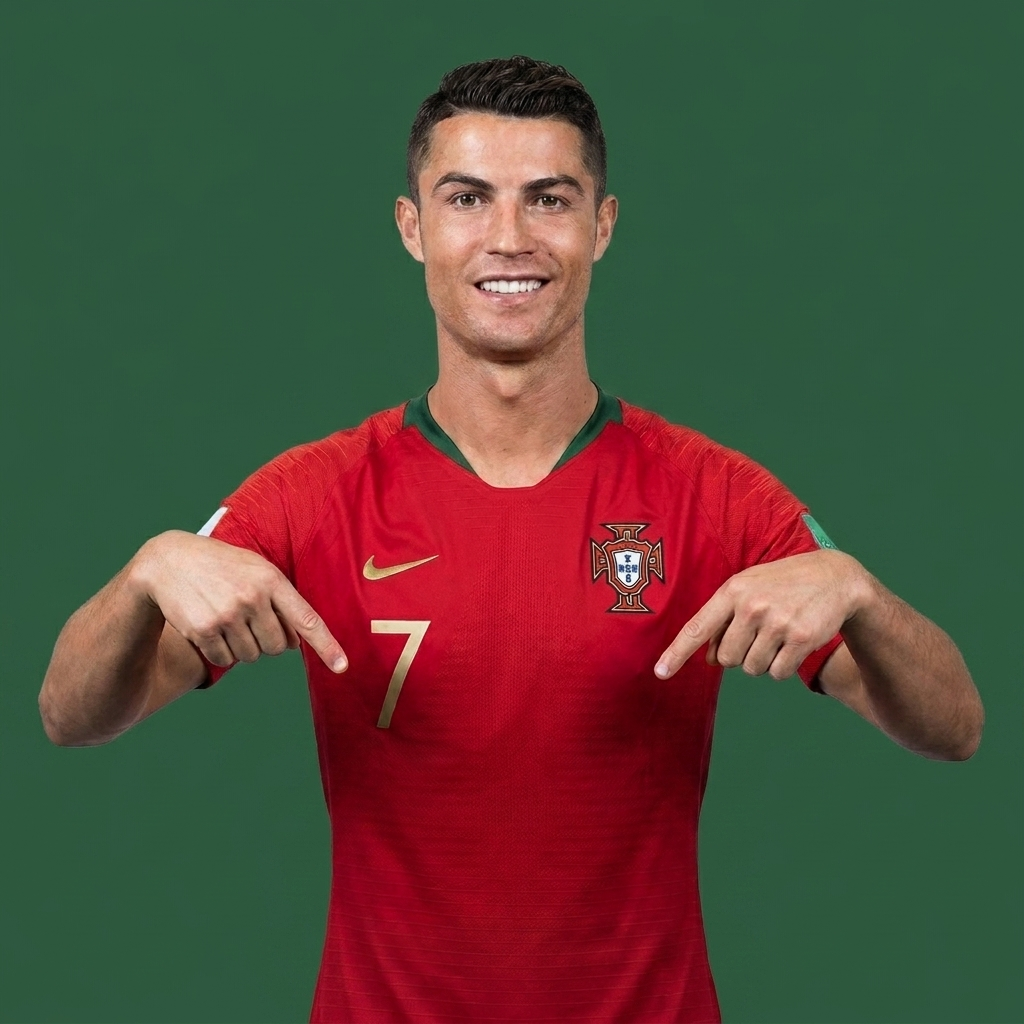
The Final. July 19. MetLife Stadium. Spain's most complete performance of the tournament against Argentina's proven knockout pedigree. Yamal's dawn against Messi's sunset. Follow live signals at /predictions/live and see our complete, verified track record at /performance/verification-proof.
*All predictions generated by OddsFlow's Dixon-Coles model and live signal engine. For informational and entertainment purposes only. Always gamble responsibly.*