

France vs England: World Cup 2026 Third-Place Match — Two Fallen Favorites, One Last Prize
Miami hosts the match nobody circled on their calendar back in June and everybody is now paying close attention to anyway. France and England, two of the four or five genuine favorites to lift the trophy when the tournament kicked off, both fell at the final hurdle before the final — France beaten 0-2 by Spain, England beaten 1-2 by Argentina — and now meet in the World Cup's most misunderstood fixture: the third-place play-off, the "bronze final," the consolation match that history keeps insisting on producing some of the most entertaining football of any tournament.
There is no trophy riding on this one in the way there is 24 hours later in New Jersey. But there is plenty else: bragging rights in the sport's oldest cross-Channel rivalry, a possible farewell match for one of the most decorated managers of his generation, the continuation (or conclusion) of Harry Kane's long, painful search for the one thing his career still lacks, and a genuinely fascinating generational subplot between Kylian Mbappé and Jude Bellingham — Real Madrid club teammates turned international opponents for one afternoon.
Match Information
| Detail | Info |
|---|
| Fixture | France vs England |
|---|---|
| Stage | Third-Place Play-Off ("Bronze Final") |
| Date | July 18, 2026 |
| Venue | Hard Rock Stadium ("Miami Stadium"), Miami Gardens, Florida |
| Kickoff | 5:00 PM ET / 21:00 UTC |
| Context | Played one day before the Final — Spain vs Argentina, July 19, MetLife Stadium |
| Fixture ID | 1591865 |
How They Got Here
France's Road to Miami — And the Wall Called Spain
| Round | Result | Notes |
|---|
| Group Stage | Advanced as group winners | Comfortable progression |
| Round of 32 | France 3-0 Sweden | Mbappé brace |
| Round of 16 | France 1-0 Paraguay | Mbappé penalty, 70th minute |
| Quarter-Final | France 2-0 Morocco | Mbappé goal (60') + assist |
| Semi-Final | France 0-2 Spain | Just 36% possession, but competitive in the moments that mattered before Spain's edge told |
|---|
England's Road to Miami — Survival, Then Heartbreak
| Round | Result | Notes |
|---|
| Round of 16 | England 3-2 Mexico | Bellingham brace (98 seconds apart), Kane penalty — won with 10 men |
| Quarter-Final | England 2-1 Norway | Foden scored, Haaland equalized, Bellingham struck the winner |
| Semi-Final | England 1-2 Argentina | England's WC knockout hoodoo vs Argentina continues |
|---|
Why They Lost: Two Tactical Post-Mortems
France's problem wasn't created chances — it was conversion. Didier Deschamps' side has built its entire tournament identity on compact defending and lethal transitions, with Mbappé as the release valve. Spain took that identity away by simply refusing to give France the ball to transition with — 65% possession forced Les Bleus to defend for longer spells than at any other point in the tournament, and when France did break, Spain's back line, reorganized after Thibaut Courtois' injury against Belgium, held its shape well enough to survive. France had the moments; they did not have the finish. In a tournament defined by Mbappé's ruthlessness in front of goal, the one match where he needed a moment of magic to arrive, it didn't.
England's problem is more familiar, and more painful. Argentina have now beaten England in three straight World Cup knockout meetings — 1986, 1998, and 2026 — since England's solitary win over them at Wembley back in 1966. Tuchel's side matched Argentina physically and, for spells, tactically, but Lionel Messi's Argentina have made a habit all tournament of finding the moment that matters most, and they found it again in Atlanta. England's issue wasn't heart or effort — Bellingham's emergence as a genuine tournament-defining talent proves the young core is there — it was, once more, a lack of the ruthless game-management edge that has separated South American and Spanish football from English football at exactly this stage of major tournaments for two generations running.
Mbappé vs Bellingham: The Next Decade's Rivalry Starts Here
There is a neat symmetry to this particular subplot: Kylian Mbappé and Jude Bellingham share a locker room every week at Real Madrid. For one Saturday in Miami, they're on opposite sides.
Mbappé, 27, arrives in Miami sitting on 20 career World Cup goals — a tally that puts him level with Lionel Messi at the very top of the all-time list, after Messi added seven goals of his own on Argentina's run to the Final. Mbappé didn't add to his total in the scoreless semi-final defeat to Spain, which means the record is currently shared rather than settled. That makes the third-place match more than a dead rubber for him personally: a goal in Miami would move him clear at the top of World Cup scoring history outright, on the very same weekend Messi is fighting for the trophy itself across town. Few players in the tournament have a cleaner individual incentive to play like it still matters.
Bellingham, 23, is the story of this England side and arguably of the tournament's next generation more broadly. The Mexico brace, the Norway winner, the all-around influence in midfield and in the box — this has been the campaign that moves Bellingham from "England's best young player" to "the player England's attack is built around," full stop. A strong personal performance against Mbappé, in a Real Madrid jersey-adjacent context if not literally, would be the kind of statement that follows a player for years. Neither man needs this match for a trophy. Both have every incentive to use it to send a message to the other about who owns the next decade of this fixture — club and country both.
Harry Kane's Trophy Drought: One More Chance Slips Away
No player carries more emotional weight into this fixture than Harry Kane. At 32, with six goals in this tournament — his best-ever World Cup return — Kane produced arguably the finest individual campaign of his England career, and it still wasn't enough to get past Argentina. A first major international trophy — after final defeats at Euro 2020 and Euro 2024, both lost to Spain in one form or another — remains the one line missing from a résumé that already includes England's all-time scoring record and, as of last year, a first Bundesliga title with Bayern Munich to finally end his club-level drought.
Third place is not a trophy. But for a player who has now watched two European finals and now a World Cup semi-final slip away in agonizingly similar fashion, closing out this tournament with a win — and potentially a Golden Boot-adjacent moment against a France side missing nothing but a finishing touch of their own — would be a small measure of consolation in a career that has otherwise specialized in getting agonizingly close. Kane will be 34 by the time Euro 2028 arrives. This may not have been the tournament that delivers the trophy, but it does not have to be the tournament that ends without any statement at all.
Deschamps' Possible Farewell — And Tuchel's Long Game
Didier Deschamps' contract with the French federation runs through this World Cup, and speculation over whether Miami represents his final match in charge of Les Bleus has followed the team since the semi-final defeat. Under Deschamps, France have reached three of the last four World Cup finals (2018, 2022, and 2026's runners-up bracket notwithstanding this year's semi-final exit) and delivered one of the great modern international eras. A win in the third-place match would not change his legacy, but it would be a fitting final note for a manager whose France teams have rarely gone quietly.
Thomas Tuchel, by contrast, is just getting started — appointed in 2024 with a contract extending well beyond this tournament and firmly toward Euro 2028. For Tuchel, Miami is less about a send-off and more about establishing the identity of a side that leans on Bellingham, Foden, and a defense that has been more resilient than spectacular. A strong finish against a French side stripped of nothing but its cutting edge would be exactly the kind of marker a still-new manager wants to plant before the real building begins.
OddsFlow Signal Room: Two for Two in the Semi-Finals
Before looking ahead to Miami, it's worth looking back at how the model performed on the two matches that put both these teams here in the first place. OddsFlow's live signal system correctly called both semi-final outcomes — the AWAY side in each fixture (Spain over France, Argentina over England) — for a combined +430 result across the two tickets. Both signals reflected exactly the pattern that played out on the pitch: dominant underlying quality from the away side even when the scoreline or possession numbers suggested a closer contest than it ultimately was.
That track record matters heading into a fixture type — the third-place play-off — that is notoriously difficult to model. Motivation, squad rotation, and emotional fatigue from a gutting semi-final loss all complicate what "form" even means for these two teams on July 18. Our model adjusts for exactly that kind of noise rather than ignoring it.
Dixon-Coles Model Prediction
Our Dixon-Coles model, adjusted for tournament fatigue, squad rotation likelihood, and the historically higher-scoring nature of third-place matches, produces the following outcome probabilities:
| Outcome | Probability |
|---|
| France win | France XX% |
| Draw (after 90) | Draw XX% |
| England win | England XX% |
Asian Handicap & Over/Under Preview
With both squads carrying knockout-stage fatigue and neither side needing to play the cautious, risk-averse football that defined their semi-final defeats, expect the Asian Handicap market to open close to even — a razor-thin line reflecting genuinely comparable squad quality with no clear tactical asymmetry to exploit, unlike the semi-finals where Spain's possession control and Argentina's game-management edge created a clearer statistical lean.
The Over/Under total is the more interesting market this time. Third-place matches have trended over 2.5 goals more often than any other fixture type at recent World Cups, driven by weakened defensive discipline (rotated centre-backs, less rehearsed structures) and attacking players — Mbappé, Bellingham, Kane, Dembélé, Foden — with every incentive to play with freedom rather than caution. Our model leans toward the Over on the total goals line for exactly that reason, with the health of both goalkeepers and the extent of expected squad rotation the two biggest swing factors to monitor before kickoff.
History Book: France vs England, The Oldest Rivalry Nobody Expected in a Bronze Final
France and England have shared a football rivalry longer than almost any fixture on the international calendar, even if World Cup meetings between them have been rare. The two nations actually met at the very tournament England won on home soil — the 1966 group stage, where Roger Hunt's brace gave England a 2-0 win at Wembley on the way to eventual glory. Sixteen years later, at the 1982 World Cup, Bryan Robson scored what was then the fastest goal in World Cup history — just 27 seconds — in a 3-1 England win over France in Bilbao.
The rivalry's most iconic chapter, however, belongs to Euro 2004: England led 1-0 deep into the second half in Lisbon before Zinédine Zidane produced one of the great individual clutch performances in tournament history, scoring a free-kick equalizer in stoppage time and converting a stoppage-time penalty moments later to turn a France defeat into a 2-1 win that remains one of the most painful late collapses in England's tournament history. A decade later the two sides drew 1-1 at Euro 2012 and played out several closely-fought friendlies in the years since, but no World Cup meeting has happened between them until now — which is exactly what makes Miami's third-place match, low-stakes as it technically is, a genuinely historic first: the first-ever World Cup knockout meeting between these two heavyweights of European football.
Why Third-Place Matches Deserve More Respect
The bronze final gets dismissed as a formality more often than it deserves. Recent history suggests otherwise: Croatia beat Morocco 2-1 in 2022 in a match both sides visibly wanted to win; the Netherlands demolished Brazil 3-0 in 2014 in one of the most one-sided beatdowns of that tournament; Germany's 2010 vintage put three past Uruguay. Removing the suffocating pressure of a final often frees both sides to simply play — and with two rosters containing this much individual attacking talent, few matches left on the World Cup calendar carry higher entertainment upside relative to their stakes than this one.
OddsFlow Verdict
This is a match without a trophy attached but without a shortage of reasons to watch closely. France arrive with the superior individual ceiling — Mbappé remains the single most dangerous attacking weapon on the pitch — but also the freshest psychological wound, having been the more threatening side in their semi-final and still losing it. England arrive battle-hardened from three straight knockout matches decided by fine margins, with Bellingham playing the football of his life and Kane chasing one final moment of catharsis in a tournament that has otherwise denied him the ending he wanted.
Expect goals, expect rotation, expect both managers to lean into what this match actually is: a low-pressure showcase for two of the most talented rosters left in the competition. Our lean favors the side with the higher individual ceiling in open, stretched matches — but a third-place play-off has a way of humbling predictions, and that unpredictability is precisely what makes it worth watching.
Read our full breakdowns of how both teams got here: France's semi-final defeat to Spain and England's historic hoodoo against Argentina. For live signals on this and every remaining World Cup 2026 fixture, visit OddsFlow's prediction hub.
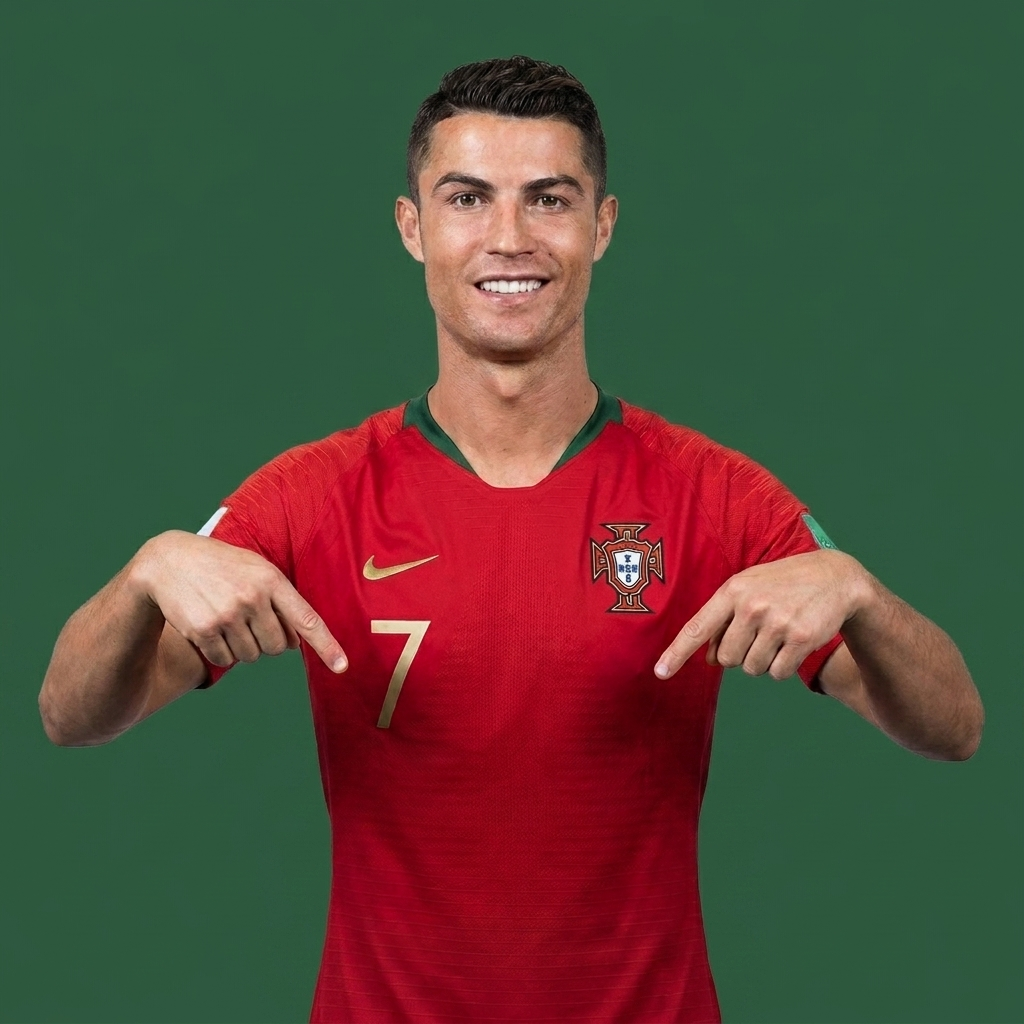
Third-Place Match, July 18, Hard Rock Stadium, Miami. The Final follows one day later — Spain vs Argentina, July 19, MetLife Stadium.
*All predictions generated by OddsFlow's Dixon-Coles model. For informational and entertainment purposes only. Always bet responsibly.*